
Last Updated on July 1, 2026 by David
Slate floors have long been celebrated for their elegance in homes across West Dunbartonshire. They elevate the charm of everything from quaint stone cottages in Alexandria to the refined period residences in Dumbarton and Clydebank.
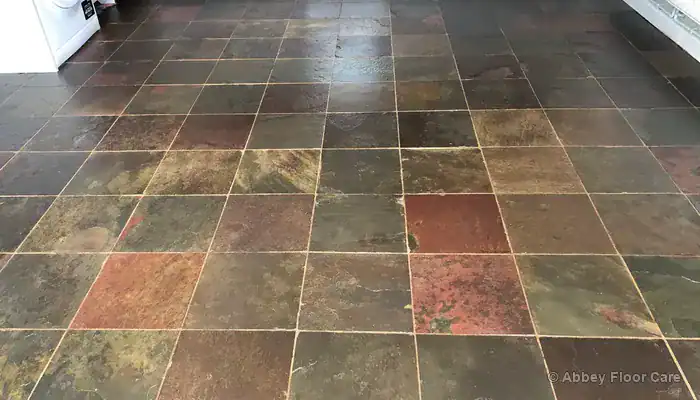
The distinctive texture and rich, layered hues of slate make it one of the most visually stunning flooring options available. Preserving its natural beauty requires tailored care that contrasts with the standard techniques used for more conventional flooring materials like ceramic or vinyl.
If you’ve researched “natural” cleaning methods for slate, you may have come across suggestions to use vinegar or lemon juice. Hold on. This guidance is one of the most damaging myths about maintaining natural stone. If you’ve already tried these methods, there’s no need to panic. It’s crucial to understand why this advice can be harmful before attempting to clean your slate floors again.
What Makes Acidic Cleaners Detrimental to Slate? A Scientific Perspective
Vinegar and lemon juice are often considered sensible, eco-friendly cleaning solutions due to their natural and chemical-free properties. both substances are acidic, and slate, like many natural stones, does not respond well to acidic environments.
When acidic substances remain on slate for extended periods, they can gradually erode the stone’s mineral structure through a process known as etching. The initial effects may not be immediately visible, but continued exposure can lead to dull patches, a roughened surface, or damage to the sealant. Once the protective layer deteriorates, the slate becomes more vulnerable to stains and moisture infiltration, undermining your cleaning efforts.
The good news is that “natural” and “safe for slate” can coexist harmoniously. You simply need to focus on using pH-neutral cleaning solutions instead of acidic ones.
Your Comprehensive Guide to Safely Cleaning Slate Floors with Eco-Friendly Solutions
Step 1: Thoroughly Remove Loose Dirt
Before introducing any water to the surface, sweep or vacuum the area carefully. This step is particularly important in West Dunbartonshire, where mud from walks near Loch Lomond or grit from damp pavements in Dumbarton and Clydebank can act like sandpaper under a wet mop, causing scratches. For optimal results, use a soft-bristled broom or a vacuum equipped with a hard-floor brush attachment.
Step 2: Prepare a Safe and Effective Cleaning Solution
Mix warm water with a few drops of a pH-neutral cleaner, such as a specialised stone soap or liquid Castile soap. Both options effectively remove dirt without the harmful acidic properties that can damage slate. Avoid using excessive soap for a more intense clean; too much soap can leave a residue that dulls the slate’s surface over time.
Step 3: Mop with Care and Precision
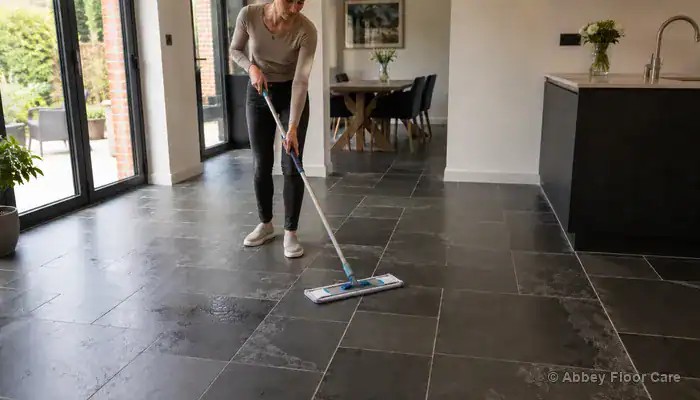
Use a well-wrung mop and work in manageable sections to prevent flooding the area. Standing water can seep into grout lines and, particularly in tiled installations, can penetrate beneath the tile backing. This is especially concerning in older Scottish homes where subfloors may not be designed to handle modern sealed slate.
Step 4: Always Dry and Buff the Floor After Cleaning
This vital step is often overlooked in cleaning recommendations. Allowing slate to air-dry can lead to subtle water spots forming as moisture evaporates unevenly from its textured surface. Buffing the floor immediately with a dry, soft towel after mopping prevents this issue and enhances the stone’s natural shine. This step elevates a floor from merely looking “clean” to genuinely reflecting meticulous care.
How to Effectively Remove Stubborn Stains with Natural Solutions
For grease or oil stains, create a paste using baking soda and a small amount of water. Baking soda is alkaline, allowing it to lift stains without harming the stone. Apply the paste to the stain and let it sit for several hours—or overnight for more stubborn marks—before wiping it away with a damp cloth.
To clean dirty grout lines, use a soft-bristled brush. Avoid steel wool or scouring pads, as these can scratch the surrounding slate. While abrasive pads may seem effective initially, they leave fine scratches that dull the stone and attract dirt over time.
How to Protect Your Slate Floor from the Harsh Scottish Climate
The challenging Scottish weather can negatively affect flooring. Adopting proactive habits can significantly extend the life of your slate floor between deep cleans:
- Install durable doormats at all entry points, especially if your family often walks near Loch Lomond or along the Clyde. Grit and mud are major contributors to surface wear on slate.
- Implement a “no shoes indoors” policy during the wetter months, which dominate the year in West Dunbartonshire.
- Quickly dry wet areas after rainfall. Older stone-built homes in the region are often prone to dampness, and excess moisture can compromise both the slate and its sealant.
- Regularly assess resealing needs. A simple water-drop test—dripping a small amount of water onto the surface and observing whether it beads or soaks in—will indicate if your sealant remains effective.
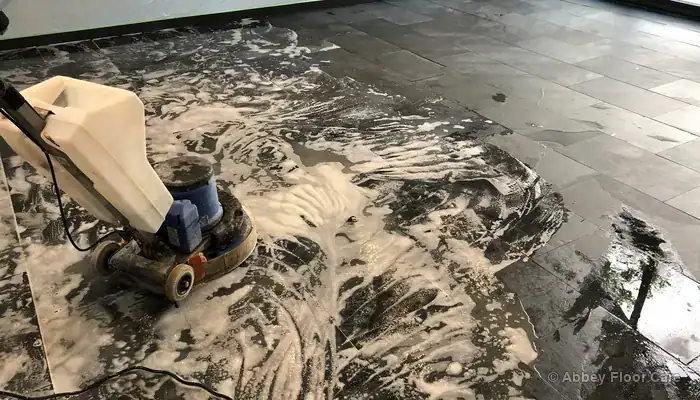
When to Consult Abbey Floor Care for Professional Assistance
While regular cleaning keeps your slate floor looking its best, certain tasks are best left to the professionals. Recognising these boundaries is essential:
- Deep scratches or chips in the stone require professional-grade filling and polishing to achieve a flawless finish.
- Removing old, discoloured acrylic sealers necessitates specialised tools and chemicals to prevent damage to the underlying slate.
- Diamond-pad polishing is essential for restoring shine and evening out wear on floors that have lost their luster over time.
- Deep sealing involves stripping the floor down to bare, clean stone rather than merely mopping and drying.
If your slate floor in West Dunbartonshire appears tired despite your diligent cleaning efforts, or if you’re unsure whether it requires resealing, Abbey Floor Care offers professional assessments and restoration services throughout Dumbarton, Clydebank, Alexandria, and nearby areas. Contact us for trustworthy advice on whether your floor needs expert intervention or simply a more effective cleaning routine.
The Article Natural Slate Floor Care: The Safe Way to Clean Slate Without Damaging It (West Dunbartonshire Guide) first appeared on https://www.abbeyfloorcare.co.uk
The Article Slate Floor Care: Safely Clean Your Natural Slate in West Dunbartonshire was originally published on https://fabritec.org
The Article Slate Floor Care Tips for Safe Cleaning in West Dunbartonshire was found on https://limitsofstrategy.com
References:
Slate Floor Care Tips for Safe Cleaning in West Dunbartonshire